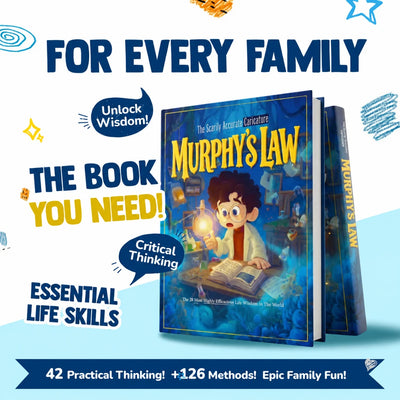
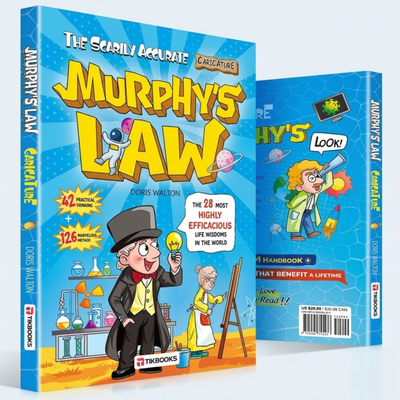
One idea from psychology, drawn as a comic for children: when words and tone disagree, people believe the tone and the face. Every child has already met it — a friend who says she is fine while looking at the floor, a joke that crossed a line nobody named. The Mehrabian Rule takes Albert Mehrabian's 7–38–55 finding about words, tone of voice and facial expression — which the book widens to gestures and posture — and turns it into comic-style scenarios about moments like those.
The moments it is written for
- Falsely accused — a classmate blames them for something they did not do; they panic, over-explain, and end up looking guiltier.
- Left out or overlooked — they miss the cue that would have told them what was going on, and do not understand why they are on the outside.
- The wrong kind of friend — they cannot yet tell a real friend from one who is only nice when it suits them, so they stay in friendships that cost more than they give.
Inside the book — six chapters
- Spotting fake friends — recognising manipulation, peer pressure and toxic dynamics before they get hurt.
- Emotional resilience — taking criticism without breaking down, and coming back after a setback.
- Reading people — what someone really means from their body language, their tone, and what they do not say.
- Handling conflict — settling disagreements with friends, teachers and family without losing their cool or their dignity.
- Speaking with confidence — saying what they mean in a way adults and classmates actually listen to.
- Natural leadership — the thinking habits behind why some children lead without trying, and how to build them.
Every chapter is told through comic-style scenarios from school and home; the publisher's description counts 100 situations across the book. The back cover puts it simply: "Be kind. Listen with your heart. Understand others."
Build and format
- Paperback comic edition; scenarios drawn with school-age characters.
- Translated edition; the cover credits the translator, Wang Xinmeng.
- Cover design may differ from the pictures; the book inside is the same.
Who it suits
- Ages 7–15 — read together at the younger end; older children read it alone, depending on reading level.
- Families in the week a friendship goes wrong, a new class starts, or a child comes home saying something was off.
Good to know
- Text is in English.
- The title refers to the psychology finding, not the author. Albert Mehrabian is not credited on the book, and it is not presented as written or endorsed by him.
- Mehrabian's figures describe how people read feelings when words and tone disagree — he has said himself they are often over-applied to all communication. We mention them as a prompt to notice tone and face, not as a rule about words.
- A general-interest comic about social skills, not a curriculum or a substitute for a conversation with a teacher where a specific concern exists.