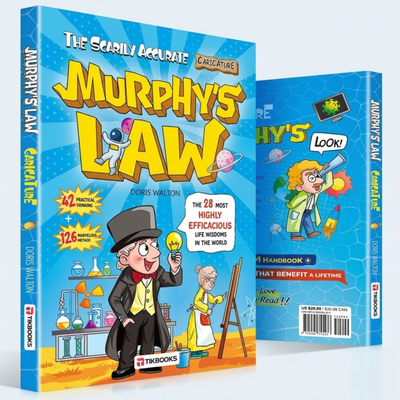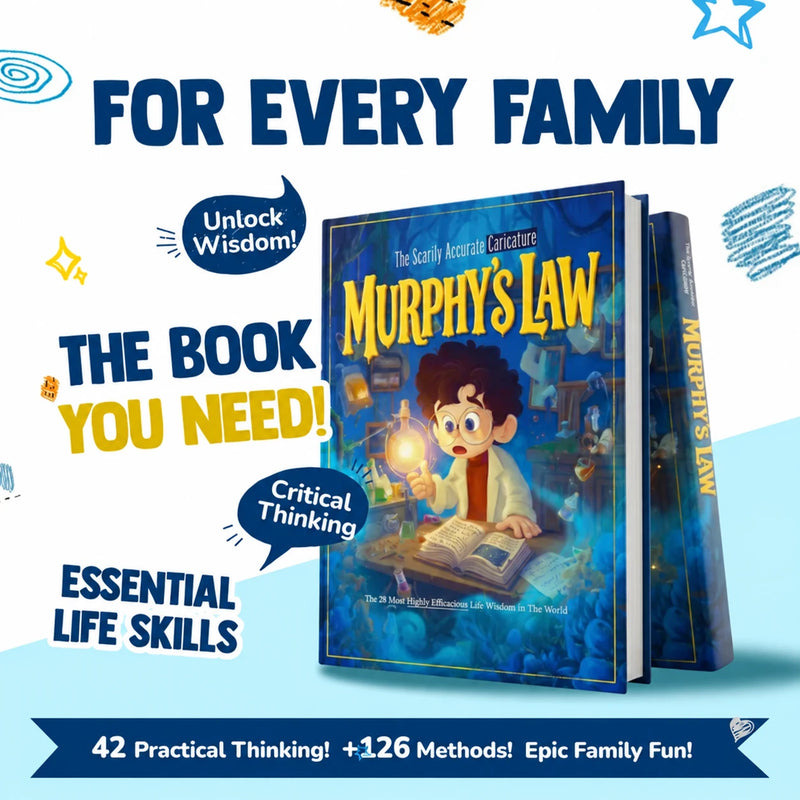
A life-skills book that explains how the real world actually works, in language a child can follow. Most children's books tell kids to be kind, stay positive and believe in themselves. Those are good messages, but they leave a gap: children also need to understand consequences, other people's motives, and what to do when a plan falls apart. This illustrated guide fills that gap using the familiar idea behind Murphy's Law — if something can go wrong, it might — and turns it into calm, practical thinking rather than pessimism.
What the book covers
- Cause and effect — short, concrete situations that show how one choice leads to the next.
- Practical problem solving — simple steps a child can use when something does not go to plan.
- Reading people — age-appropriate lessons on fairness, peer pressure and honest communication.
- Resilience — how to treat a mistake as information instead of a verdict.
- Independent thinking — questions that invite a child to look past the obvious answer.
Who it suits
- Ages 6–8 — best read together with a parent, one short lesson at a time.
- Ages 9–12 — readable independently; works well as a bedtime or car-ride book.
- Parents and teachers looking for a discussion starter rather than a lecture.
How families use it
The lessons are short and self-contained, so you can read one at breakfast or before bed without committing to a chapter. Many of them end on a question, which is deliberate — the book is designed to start a conversation between you and your child, not to replace it.
Good to know
- Text is in English.
- Illustrated throughout; written for reading aloud as well as independent reading.
- This is a general-interest children's book. It is not a substitute for advice from a teacher, paediatrician or child psychologist where a specific concern exists.
- Reading level varies from child to child — the ages above are a guide, not a rule.